Machine Learning Foundations A Case Study Approach Week 3
Classification: Analyzing Sentiment
Perhaps one of the most common areas of machine learning. It is also one of the most useful, and perhaps one of the most intuitive as well.
It can figure out:
- Whether email is spam or not
- Whether a document comes from a sports topic, about politics, or about entertainment
Starting with a use case, which is an exciting one, around restaurant reviews.
Predicting Sentiment By Topic
An Intelligent Restaurant Review System
There are many system for restaurant reviews out there, but going to talk about a pretty new and exciting one that can be built.
It’s Big Day & Want To Book Table For Nice Japanese Restaurant
In Seattle there are really awesome places for Japanese food. There are many, many places for sushi, and there are many that have really good ratings (4 stars). What are people saying about the food? The ambiance?
Need to think about different aspects:
- In terms of the food
- In terms of the ambiance
- In particular, in terms of the sushi
Want to get the best, freshest fish, and the most awesome, innovative sushi.
Positive Reviews Not Positive About Everything
Sample Review:
- Watching the chefs create incredible edible art made the experience very unique.
- Experience was positive (👍🏻)
- My wife tried their ramen and it was pretty forgettable.
- Ramen was negative (👎🏻)
- All the sushi was delicious! Easily best sushi in Seattle.
- Sushi was really positive (👍🏻👍🏻)
Do not care much about the ramen because not going to this place for ramen. But care about the good experience and amazing sushi.
From Reviews To Topic Sentiments
When thinking about restaurant reviews, want to understand the aspect of the restaurant. Their positive or negative, and really think about which one of those really affect the interest.
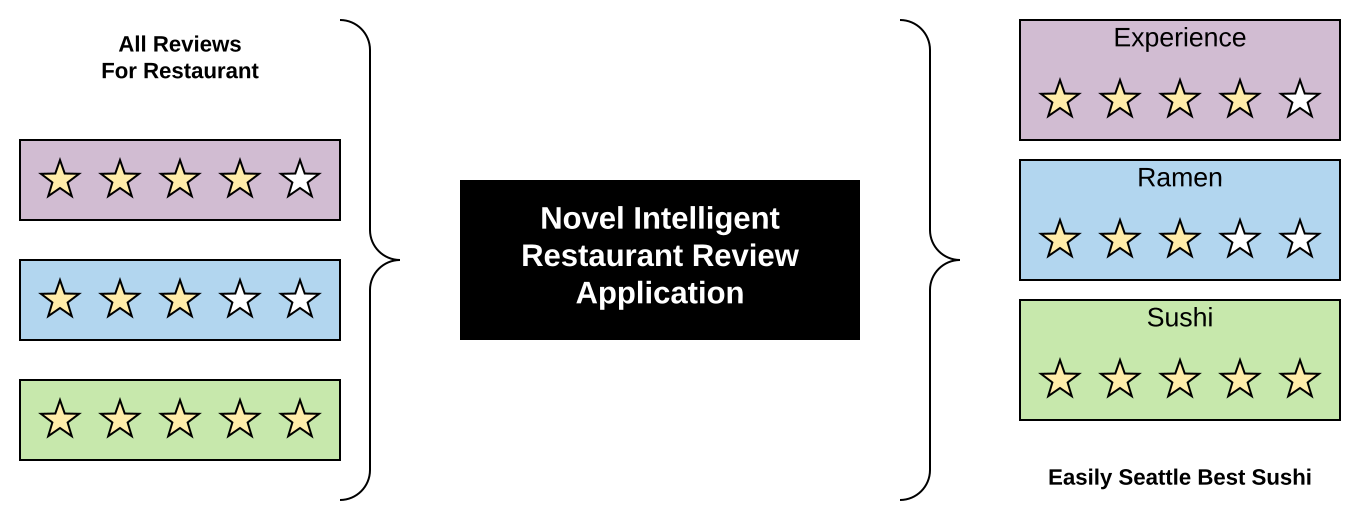
Look at all the restaurant reviews, feed them to this new, really exciting, new type of restaurant recommendation system that is going to tell:
- The experience was good, four stars
- The ramen was so-so, but who cares
- The sushi, the most important, was five stars
It is going to give some interesting feedback, such as this is easily the best sushi in Seattle.
Intelligent Restaurant Review System
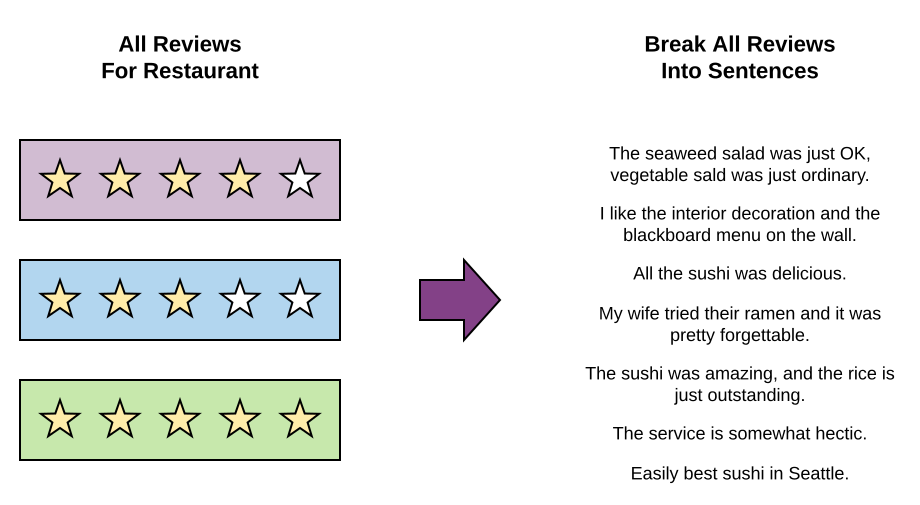
How to build such an intelligent restaurant review system?
- Start with all the reviews
- Break them up into sentences
- Each review is composed of multiple sentences
- Some sentences cover different aspects of the restaurant
Core Building Block
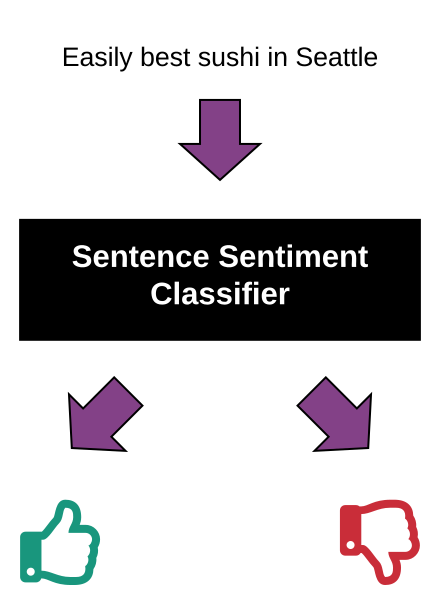
For example, a sentence can say: “Easily best sushi in Seattle”.
Feed the sentence through a sentiment classifier. The sentiment classifier will return this sentence as positive, or as negative?
Intelligent Restaurant Review System
With the sentiment classifier, which can take a sentence and say it is positive or negative.
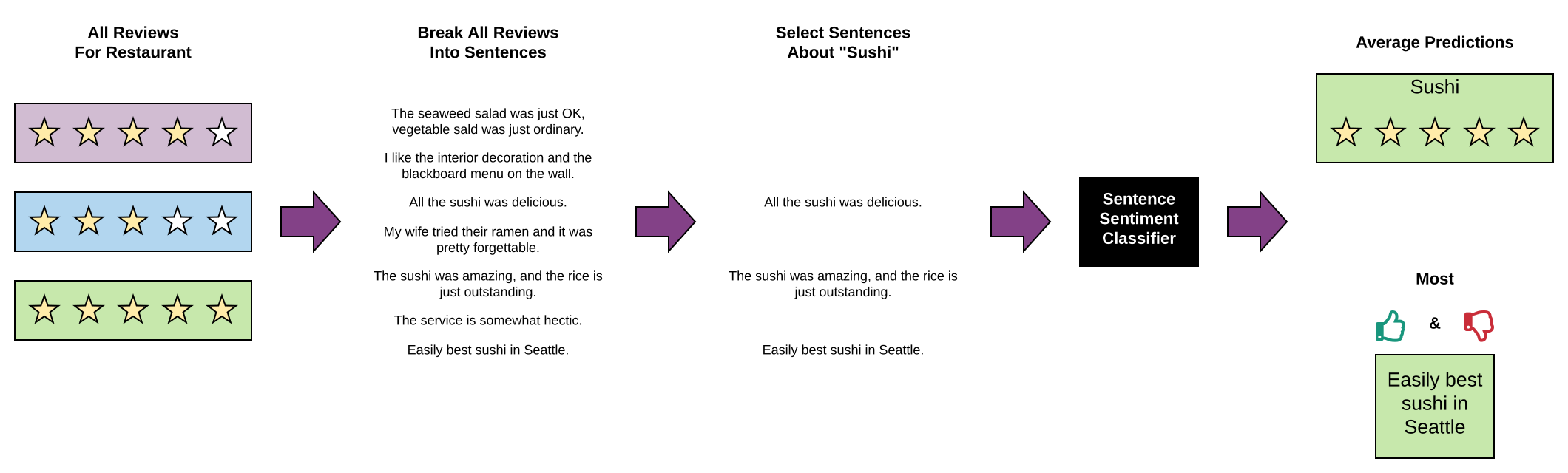
How to build this new kind of cool restaurant review experience?
- Take all the reviews
- Break them into sentences that will be discussed
- Select the sentences (not all of them, but a subset of those) that talk about the important aspect (in this case sushi)
- Feed those sentences through the sentiment classifier (each one of them)
- Average the results
In this case all of the sentences were positive, so this is a five star restaurant review in terms of the sushi.
Can also look at the sentences about sushi and look at which ones are most positive.
Classifier Applications
Build a while new kind of restaurant experience, or restaurant review experience, using classifiers. Dig in and really understand a little bit more what a classifier is, and some other applications of classifier.
Classifier
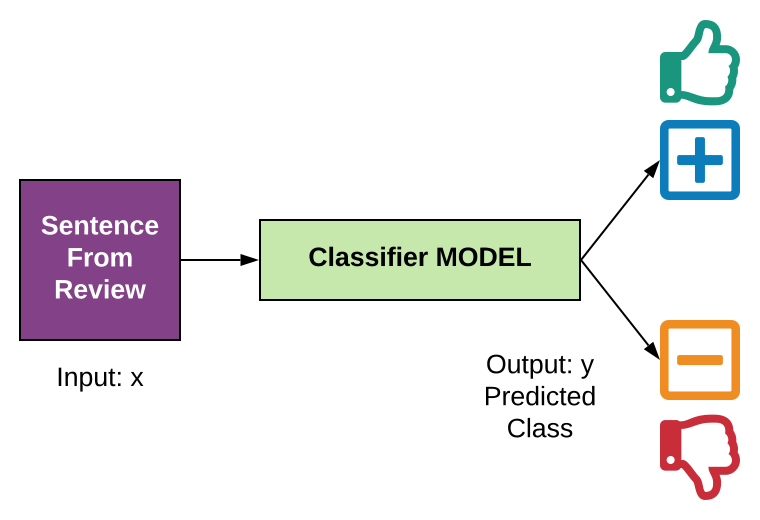
A classifier:
- Takes some input x (for example, a sentence from the review or other input)
- It pushes it through what’s called a model
- To output some value y (trying to predict)
- Here it is a class (for example, positive or negative)
- Positive in the case of sentiment analysis corresponds with thumbs up reviews
- Negative corresponds with thumbs down
But that’s just one example of classification.
Example Multiclass Classifier
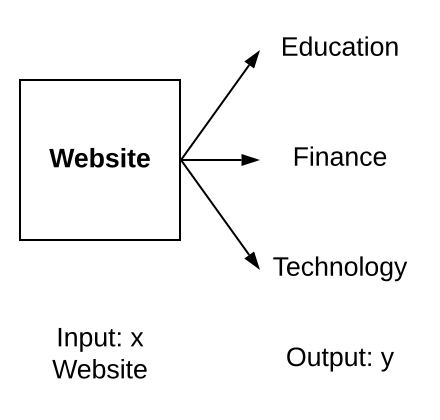
Output y has more than 2 categories.
Look at text of a web page(s), figure out which web page(s) is interesting, align them to categories
- Education
- Finance
- Technology
- So on…
There’s not just two categories. There can be three, four, or even thousands of categories to predict from.
Spam Filtering
Now, another example of classification, which really has impacted lives, is in spam filtering.
Perhaps in the early 2000s, quality of samp filters were not very good.
- Were all hand tuned
- Spammers kept changing the words a little bit
- Adding numbers instead of letters
- Beating the spam filters
What really changed the world of spam filtering is machine learning, it is classifiers.
They took input x of the email and they fed it through a classifier that predicted whether it is spam or not. It did that very well, by not just looking at the text of the email, but it looks at other characteristics.
- Who sent it
- Somebody’s whose a close friend
- Somebody with a lot of communication
- It is less likely to be spam
- The IP address (a person sending from the usual computer)
- So on…
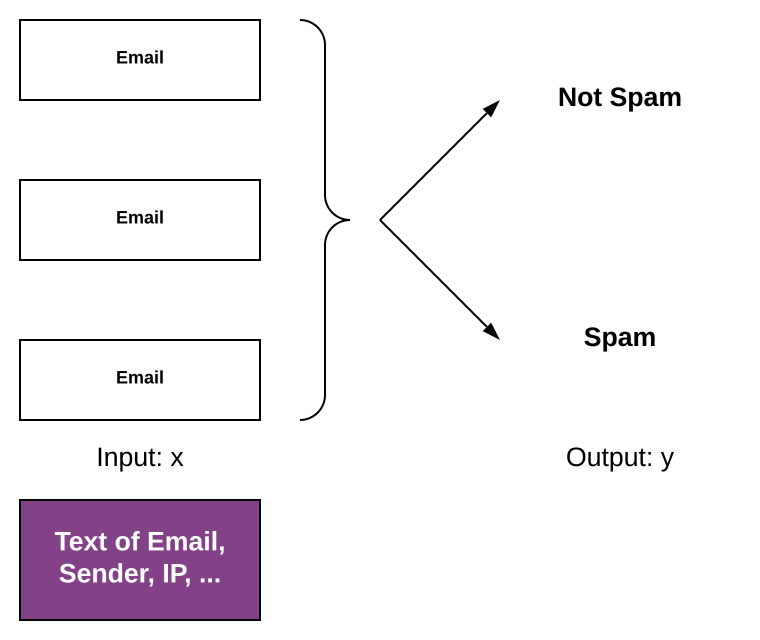
Image Classification
In computer vision, there is a lot of classification. Take an image, and figure out what is in that image.
- Input x: are the pixels of the image
- Feed it to a classifier
- Predict things like is this a dog
- Labrador retriever
- Golden retriever
- Different kind of dog
Personalized Medical Diagnosis
Can also use classification in medical diagnosis systems. This is what doctors do.
- Take temperature
- Look at x-ray
- Look at some medical test
- Make prediction about what’s ailing somebody (variable y being predicted)
- Healthy
- Have a cold
- Have the flu
- Have pneumonia
- …
Now these days, there is really interesting new things around personalized medicine. The prediction doesn’t just depend on the standard measurement, but can be really personalized.
- Can depend on particular DNA sequencing
- Lifestyle
Reading Mind
This idea of classification in machine learning has really gone much further, even to be able to read minds.
Take an image of the brain using technology called FMRI, which is a brain scan, which predict:
- When reading a word of text
- Whether you are reading the word hammer or the word house
But in fact, there are many interesting things
- Look at a picture of a hammer or a house
- Train classifier on reading words hammer and house
- Still able to read mind and figure out what picture looking at
Linear Classifier
One of the most common types of classifiers is also called linear classifier.
Representing Classifiers
The question now is how to represent the classifier?
- Start with some sentences
- Feed it through a classifier
- Get a prediction whether it is a positive or a negative sentence
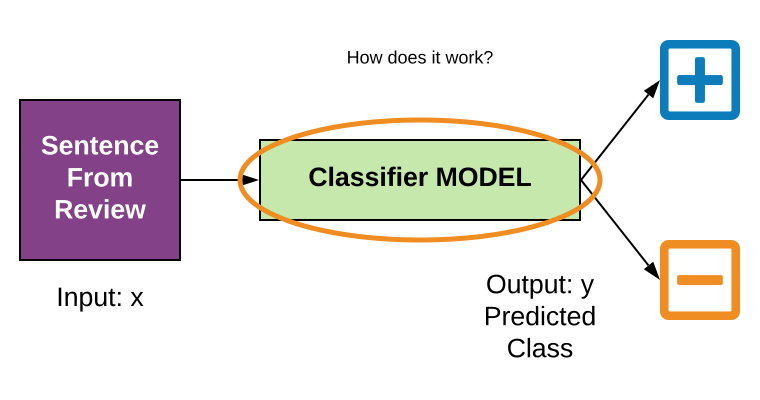
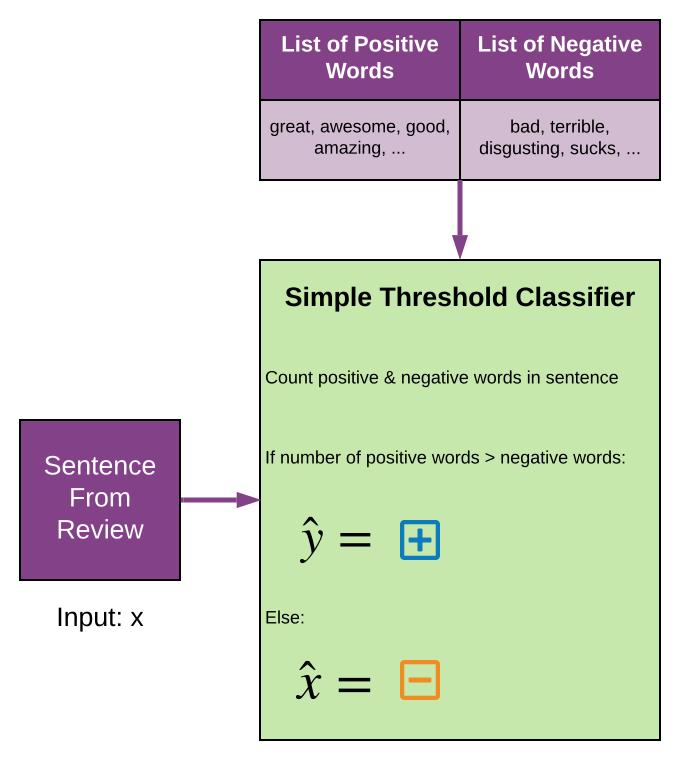
How does the classifier work? In the sentimental analysis, imagine a simple kind of threshold classifier.
- Take a sentence
- Identify all of the positive words and negative words
- Count how many positive word(s) and how many negative word(s)
- If the number of positive words is higher than the number of negative words
- Have a positive sentence
- But if there is more negative words
- Have a negative sentence
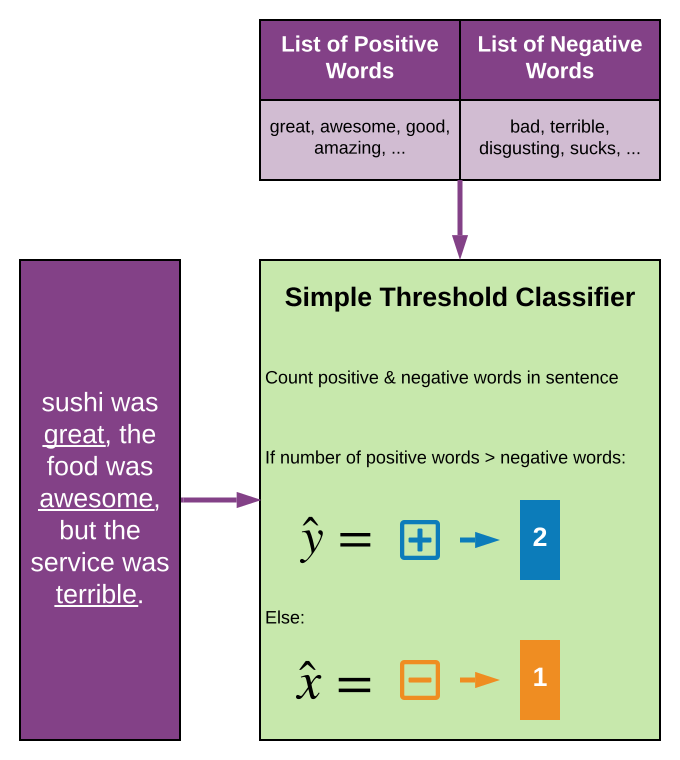
If the input sentence is, “Sushi was great, food was awesome, but the service was terrible”:
- Sushi was great (positive one)
- Food was awesome (positive two)
- But the service was terrible (negative one)
There is two positive and one negative, and in the end positive wins, so it is a positive prediction.
Problems With Threshold Classifier
Now threshold classifiers have some limitations.
- Addressed by learning a classifier
- How do we get list of positive/negative words?
- Words have different degrees of sentiment:
- Great > good (tune and figure out what is better)
- How do we weigh different words?
- Addressed by more elaborate features
- Single words are not enough:
- Good → Positive
- Not good → Negative
- Single words are not enough:
A (Linear) Classifier
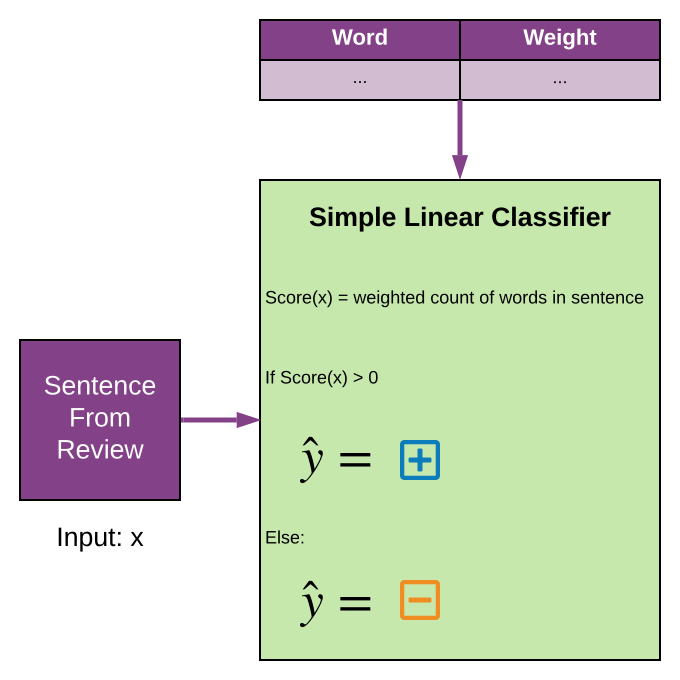
So a linear classifier, instead of having a list of positive and negative words, actually takes all of the words and adds weight to them. Words that really don’t matter (restaurant, the, we, where, …) to sentiment get weight of zero.
Will use training data to learn a weight for each word.
| Word | Weight |
|---|---|
| good | 1.0 |
| great | 1.5 |
| awesome | 2.7 |
| bad | -1.0 |
| terrible | -2.1 |
| awful | -3.3 |
| restaurant, the, we, where, … | 0.0 |
| … | … |
Scoring Sentence
Given those weight, how to figure out if the sentence is positive or negative? Using the idea of scoring.
Take this sentence, “sushi was great, the food was awesome, but the service was terrible”. To score the sentence, compute the score of the input sentence x.
| Word | Weight |
|---|---|
| good | 1.0 |
| great | 1.5 |
| awesome | 2.7 |
| bad | -1.0 |
| terrible | -2.1 |
| awful | -3.3 |
| restaurant, the, we, where, … | 0.0 |
| … | … |
Input x:
- Sushi was great,
- The food was awesome,
- But the service was terrible.
Calculation:
if score(x) > 0: + (positive)
if score(x) < 0: - (negative)
So this is how linear classifier works, if the weight of each word is known.
Called a linear classifier, because output is weighted sum of input.
Just weight, what features appears and what words appear in the input.
So working for simple linear classifier to start out with.
- Given a sentence and given the weights for the sentence
- Compute the score, which is the weighted count of the words that appear in the sentence
- If the score is greater than zero, predict () to be positive
- If the score is less than zero, predict it to be negative
Decision Boundaries
So classifiers are really trying to make decisions.
- Whether a sentence is positive or negative
- Whether a set of lab tests plus x-ray plus measurements lead to a certain disease like flu or cold
How classifiers, especially linear classifiers make decisions?
Suppose Only Two Words Had Non-Zero Weight
To understand decision boundaries, suppose there is only two words with non-zero weight.
| Word | Weight |
|---|---|
| awesome | 1.0 |
| awful | -1.5 |
Calculation
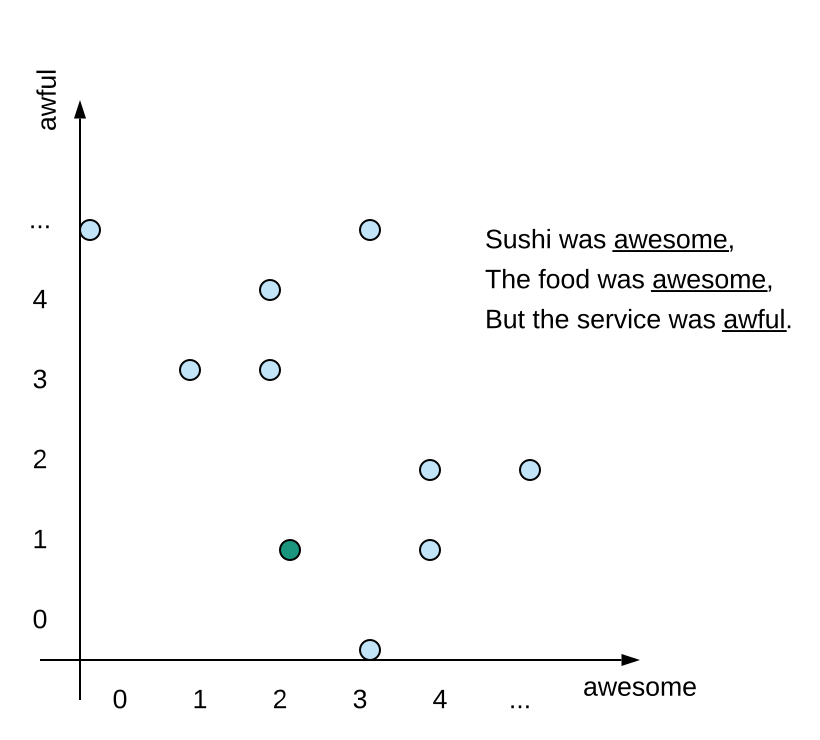
Understand a little better how to score the sentences and what does that imply about the decision.
- Three (3) awesomes gives a positive prediction because the score is greater than zero (that is true for every point on the bottom right of the axis)
- While points on the top left all have score less than zero (for example the point three (3) awfuls, one (1) awesome) are label negative
In fact, what separates the negative predictions from the positive predictions is the line that defines the places unknown for positive and negative. That’s the line where . That’s the line when the prediction is uncertain, and it is called the decision boundary. Everything on one side predicted as positive, everything on the other is predicted as negative.
Notice that the decision boundary is a line. That’s why it’s called a linear classifier (linear decision boundary).
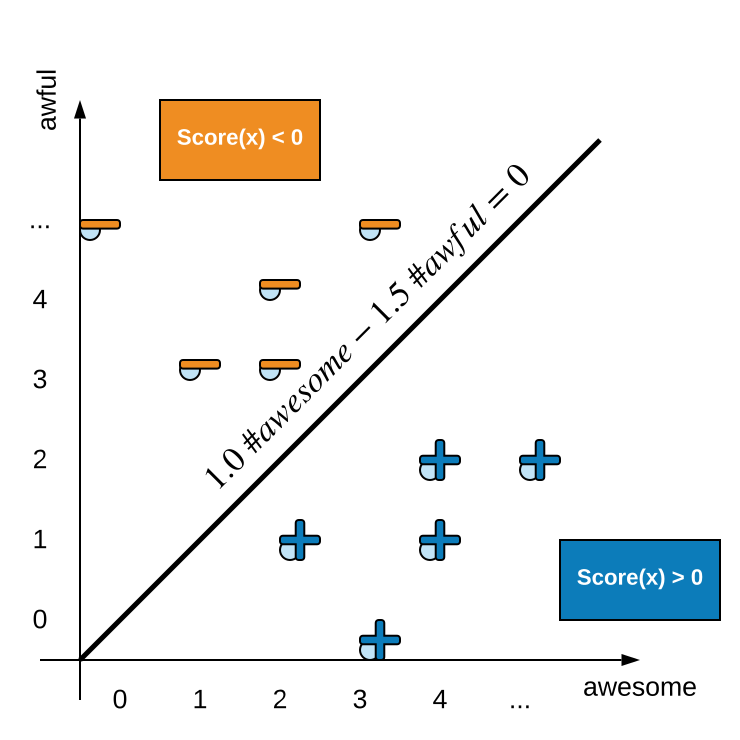
Decision Boundary Separates Positive & Negative Predictions
- For linear classifiers
- When 2 weights are non-zero
- line
- When 3 weights are non-zero
- plain (somehow inclined in space)
- When many weights are non-zero
- hyperplane (really high dimensional separators)
- When 2 weights are non-zero
- For more general classifiers
- more complicated shapes (squiggly separations)
Training + Evaluating Classifier
Here in classification, the errors are a little different because it is talking about which inputs are correct and which inputs are wrong.
Training Classifier = Learning Weights
Talk a little bit about measuring error in classification.
Learn a classifier:
- Given a set of input data
- These are sentences that have been marked to say positive or negative sentiment
- Split it into a training set and a testing set
- Feed the training set to the classifier to learn
- The algorithm is actually going to learn the weights for words
- These weights are going to be used to score every element in the testing set
- Evaluate how good in terms of classification
What does that evaluation looks like?
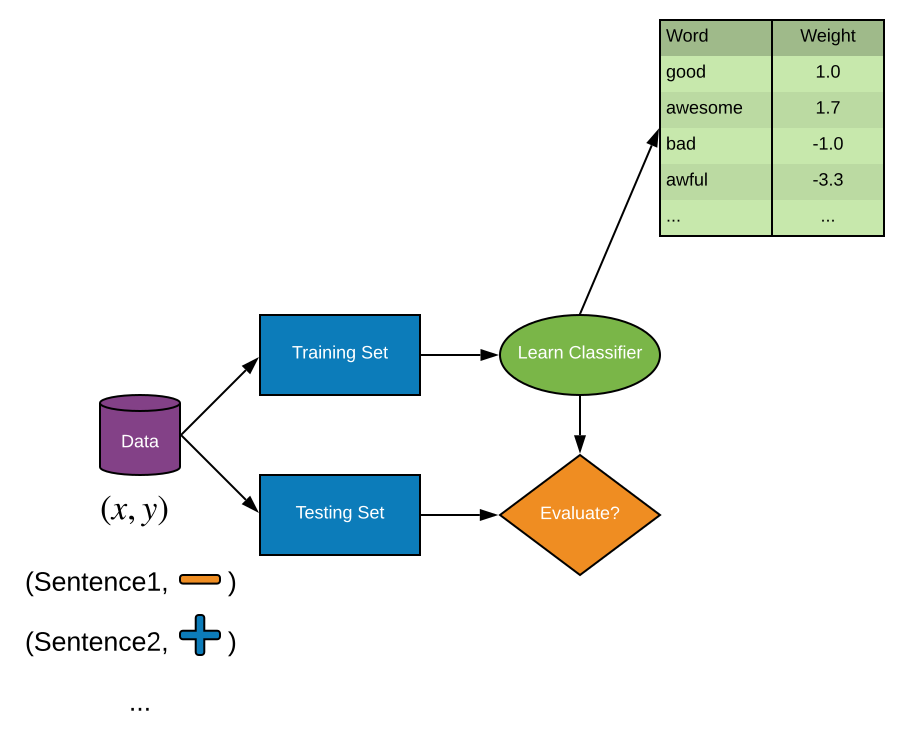
Classification Error
How to measure (classification) error?
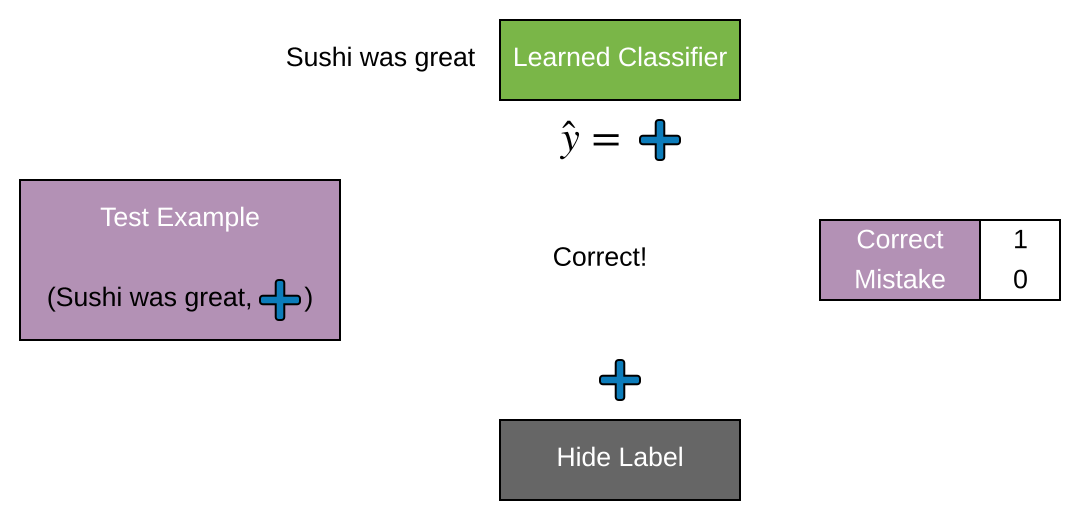
Given a set of test examples in the form, Sushi was great, is a positive sentence. Trying to figure out how many of these test get correct and how many get mistake.
Take the sentence, Sushi was great, and feed it through the learned classifier. But don’t want the learned classifier to actually see the true label. Want to see if it gets the true label right, so going to hide that true label. The sentence gets fed to the learned classifier while the true label is hidden.
Now given the sentence, going to predict as being positive. Leaving this as a positive sentence, made a correct prediction. The number of correct sentences goes up by one (1).
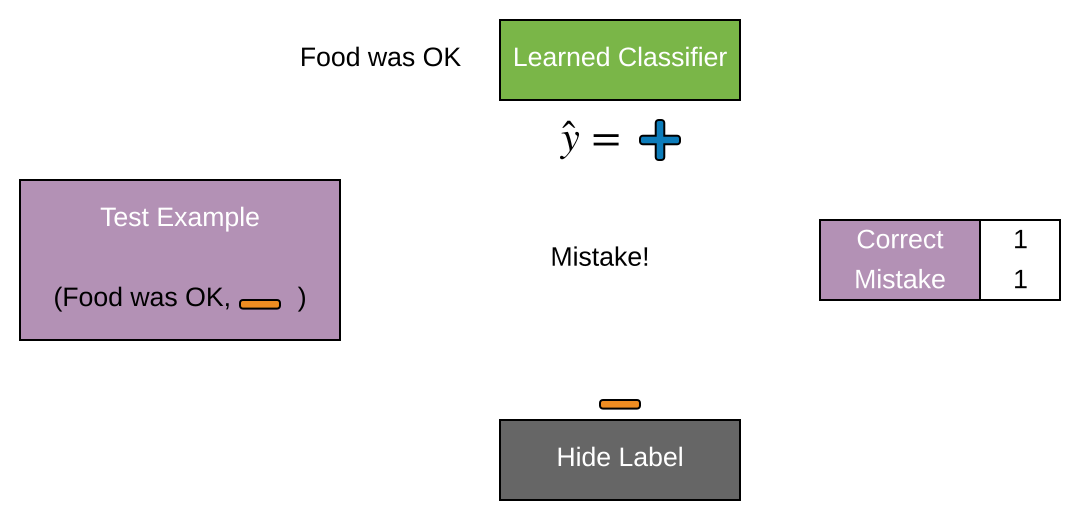
Now take another sentence, another test example, Food was OK, as a negative sentence. So that’s a bit of an ambiguous sentence, but it’s been labeled as negative in the training set.
So now feed the sentence to the classifier, hide the label. In this case, because the Food was OK can be revealed as positive. Maybe it makes a prediction that this is a positive sentence, then it is a mistake, because the true label is negative.
Do this for every sentence in the corpus.
Classification Error & Accuracy
There are two common measures of quality in classification.
- Error measures fraction of mistakes
- Best possible value is
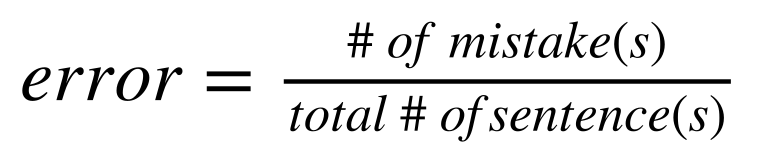
Now, it’s common to instead of talk about error, to also talk about accuracy of the classifier. Accuracy is exactly opposite of that.
- Often, measure accuracy
- Fraction of correct predictions
- Best possible value is
In fact, there’s a really natural relationship between error and accuracy, , and vise versa.

What’s Good Accuracy?
Discussed error and accuracy as ways to evaluate a classifier. Now, it’s very important to understand the error and accuracy actually getting from classifier. Really think deeply about whether those are good error or good level of accuracy.
What If You Ignore The Sentence, Just Guess?
One common mistake might make is to say how good is the classification at all? When building a classifier, the first baseline comparison it should do is against random guessing.
- For binary classification:
- Half the time, you’ll get it right! (on average)
- The , or
- Half the time, you’ll get it right! (on average)
- For classes, the
- It is for 3 classes, for 4 classes, …
So at the very least, it should beat random guessing really well. If not, then the approach is basically pointless.
Is Classifier With 90% Accuracy Good? Depends…
Now, even beyond beating random guessing, truly think deeply about whether the classifier, even if it looks really good, is it really meaningfully good?
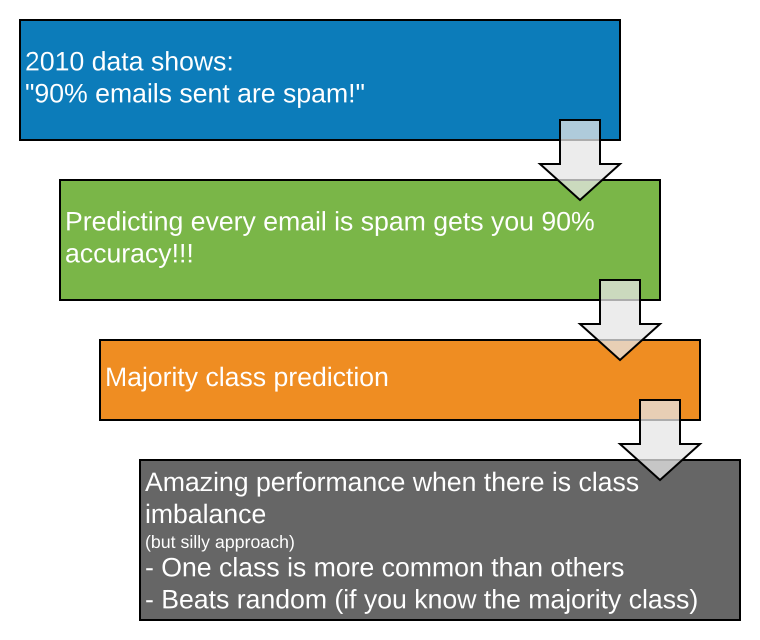
For example, suppose there is a spam predictor that gets accuracy. Should go brag about it? It that awesome? Well, it really depends. So the case of spam, not so good, because in 2010, data shows that of the emails ever sent were spam. So if just guess that every email is spam, accuracy would be .
This is a problem where this is what’s called majority class prediction, so it’s just predicted classes is most common. It can have amazing performance in cases where there’s what’s called class imbalance.
- One class has much more representation than the others
- Spam is much more representative than regular good emails
Be very cautious and really look at whether is class imbalance when try to figure out whether accuracy is good. This approach also beats random guessing if the majority class is known.
So, Always Be Digging, Asking The Hard Question About Reported Accuracy
So should always be digging into problem, and understanding, really thinking about the predictions and whether that accuracy is really meaningfully good for the problem.
- Is there class imbalance?
- How does it compare to a simple, baseline approach?
- Random guessing
- Majority class
- …
- Most importantly: what accuracy does my application need?
- What is good enough for my user’s experience?
- What is the impact of the mistake we make?
False Positive, False Negative, Confusion Matrices
Talked about error and accuracy that a classifier might make. But there are different kind of error.
Mistake Type
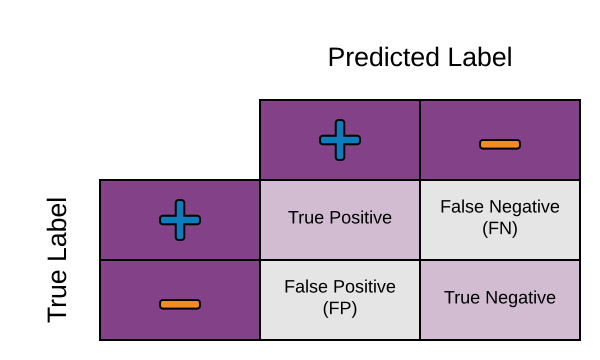
This kind of error is called type of mistake. It’s important to look at the type of mistake a classifier might make. One way to do that is through what’s called a confusion matrix.
So talk about the relationship between the true label and whatever classifier predicts, the predicted label.
- If the true label is positive, and predicted a positive value for the sentence, call that a true positive because it is right
- Similarly, if the true label is negative and predicted negative, that’s a true negative, because got that right
Now, there is two kinds of mistakes
- If the true label is positive, but predicted negative, call that a false negative
- If the true label is negative, when predicted positive, call that a false positive
The false negative and false positive can have different impacts on what can happen in practice with the classifier.
Cost Different Mistake Type Can Be Different (&High) For Some Applications
Look at two applications, and what the cost has of false negative versus false positive.
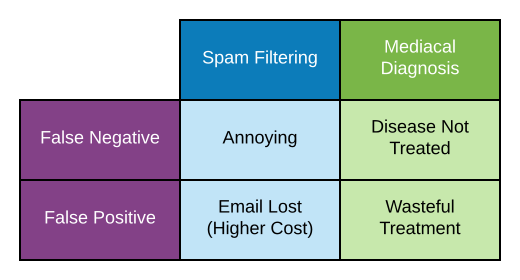
- If consider spam filtering, a false negative is an email that ws spam but went into the folder it thought it was not spam
- If looking at a false positive that’s an email that was not spam that go labeled as spam (went to spam folder), never saw it, lost that email forever (high cost)
Now can also look at medical diagnosis
- A false negative is there’s a disease but didn’t get detected, so the classifier said it was negative
- Don’t have disease
- Disease goes untreated, which can be really bad thing
- A false positive can also be a bad thing
- Classify as having the disease when never had the disease
- In this case, get treated potentially with a really bad drug or false side effect for disease that never had
In medical complications it really depends on the cost of the treatment and how many side effects it had versus how bad the disease can be.
Confusion Matrix - Binary Classification
Now, this relationship between the true label and the predicted label, false negative, false positive, is called the confusion matrix.
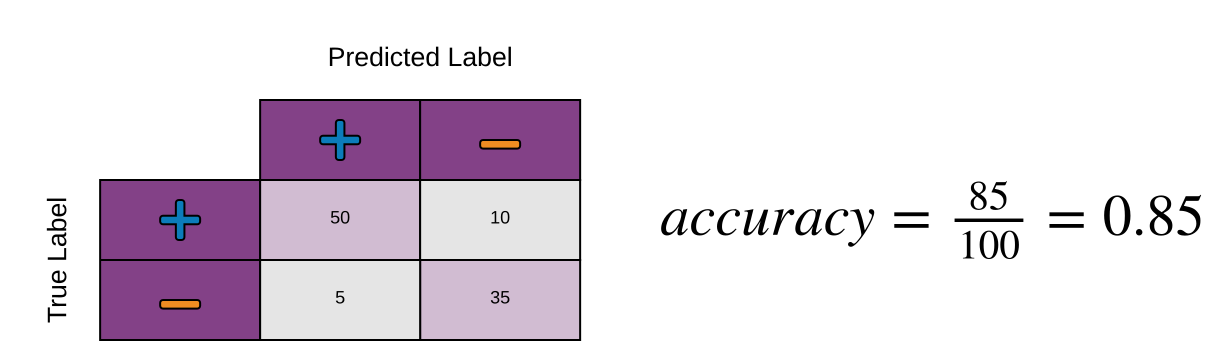
So for example, have a setting with 100 test examples, 60 positive, and 40 negative. So there’s a little bit of class imbalance but not too much.
- 60 positive
- So of those 60 positives, if got 50 of them correct
- 40 negative
- So of those 45 negatives, if got 35 of them correct
So out of the 100 examples, got 85 correct. The accuracy is correct over , which is , or .
Can also discuss the false negative and the false positive.
- The positive, got labeled as negative, that’s a false negative (10)
- The negative, got labeled as positive, that’s a false positive (5)
So in this example, got accuracy. Got higher false negative rate, than false positive rate. Now those words, false negative, false positive, apply only for minor classification for two classes. But the ideal confusion matrix works well even when have more classes.
Confusion Matrix - Multiclass Classification
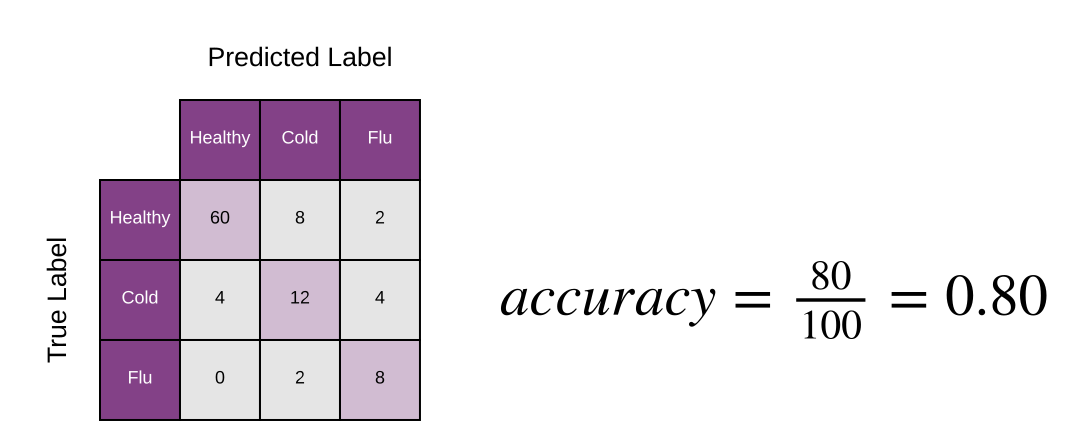
So say there are 100 test examples and this is for medical diagnosis, so there are 3 classes, healthy, cold, flu.
The 100 test subjects:
- Had 70 with that were healthy
- Got 60 correct for healthy
- Got 8 were confused with cold
- Got 2 were confused with flu
- Had 20 that had cold
- Got 12 correct for cold
- Half got confused with healthy (4)
- Half got diagnosis with something stronger, the flu (4)
- Had 10 that had the flu
- Got 8 correct for flu
- Made no mistake, nobody that came in for flu was thought healthy (0)
- But 2 of those 10 were thought to have just a cold and not the flu
So, the total, the accuracy, here was (), divided by . So that is , or accuracy.
But can talk about false predictions. Can say it’s more common to confuse healthy with having a cold than it is with having the flu. The flu is a more complex disease so might have those mistake.
So this is an example of a confusion matrix. Can really understand the types of mistakes made, and can interpret those. Really important thing to do in classification.
Learning Curves: How Much Data Needed?
In the regression, talked about the relationship between error and accuracy in the complexity of the model. Talk a little bit about the relationship in terms of the amount of data to learn.
How Much Data Does Model Need To Learn?
Explore the question of how much data is needed to learn. This is a really difficult and complex question in machine learning.
- The more the merrier
- But data quality is most important factor
- (Having bad data, lots of bad data, is much worse than having much less, much fewer data point with really good, clean, high-quality data point)
- Theoretical techniques sometimes can bound how much data is needed
- Typically too loose for practical application
- (In practice, there’s some empirical techniques to really try to understand how much error is made, and what that kind of error looks like)
- But provide guidance
- In practice:
- More complex models require more data
- Empirical analysis can provide guidance
Learning Curves
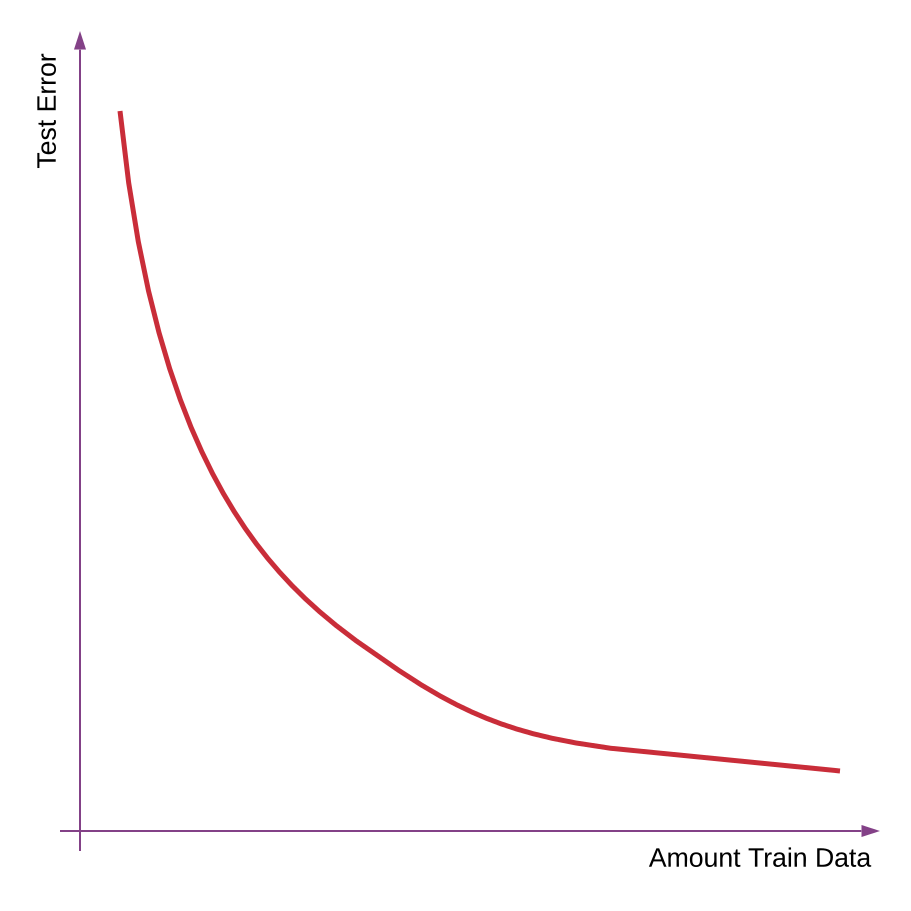
Now the important representation for this relationship between data and quality is what’s called the learning curve.
- A learning curve relates the amount of data for training with the error.
- Here talking about testing error
- Very little data for training, the test error is going to be high
- But a lot od data for training, the test error is going to be low
The curve is going to get better and better with more and more data.
Limit? Yes, For Most Models…
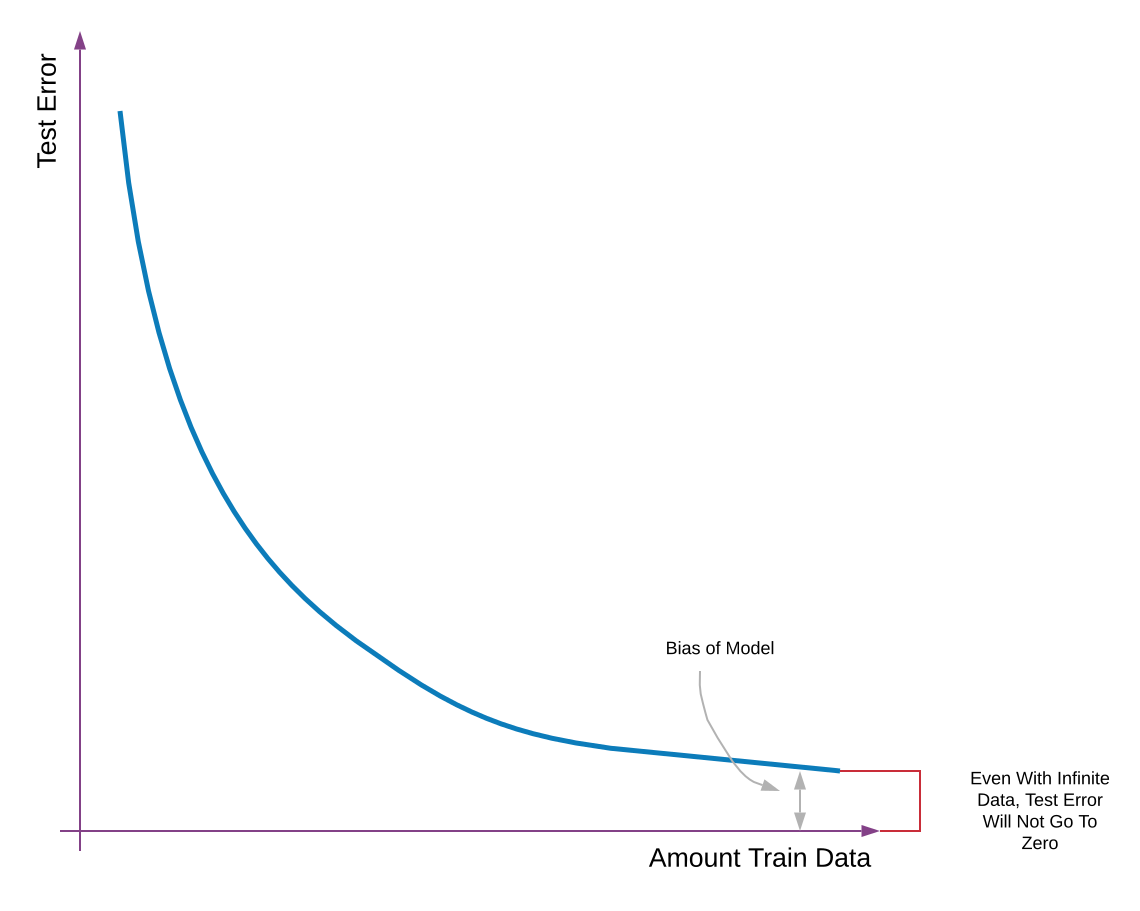
Is there a limit? Is this quality just going to get better and better forever by adding more data? The test error is going to decrease by adding more data.
However, there is some gap here. The question is whether that gap can go to zero? The answer is…in general, no. This gap is called the bias.
So intuitively, it says even with infinite data, the test error will not go to zero.
More Complex Models Tend To Have Less Bias…
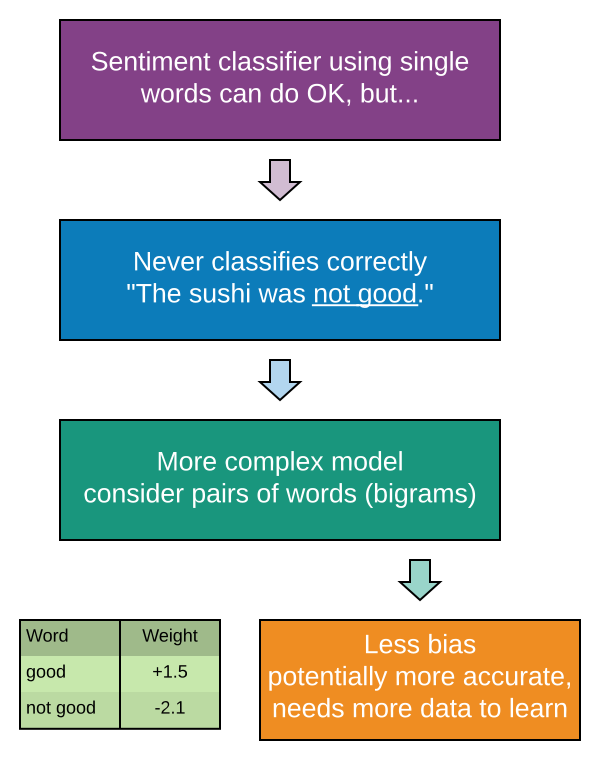
More complex models tend to have less bias. Look at the sentiment analysis classifier, if just use single words like awesome, good, great, terrible, awful, it can do ok. Maybe it do really well, maybe just does okay.
But even with infinite data, even with all the data in the world, it never going to get his sentence right, the sushi was not good. This is because it is not looking at pairs of words, but just looking at the words good and not individually.
So more complex models, that deals with combinations of words, or simply called the bigram model, where looking at pairs of secret words like not good.
Those models require more parameters, because there’s more possibilities. They can do better.
- They may have a parameter for good, say
- But not good, say
It gets that sentence, the sushi was not good, correct. So they have less bias.
They can represent sentences that couldn’t be represented as words, so they’re potentially more accurate. But they need more data to learn, because there’s more parameters. There’s not just a parameter for good, there’s now a parameter for not good, and all possible combinations of words.
The more parameters the model has, in general, the more data it need to learn.
Models With Less Bias Tend To Need More Data To Learn, But Do Better With Sufficient Data
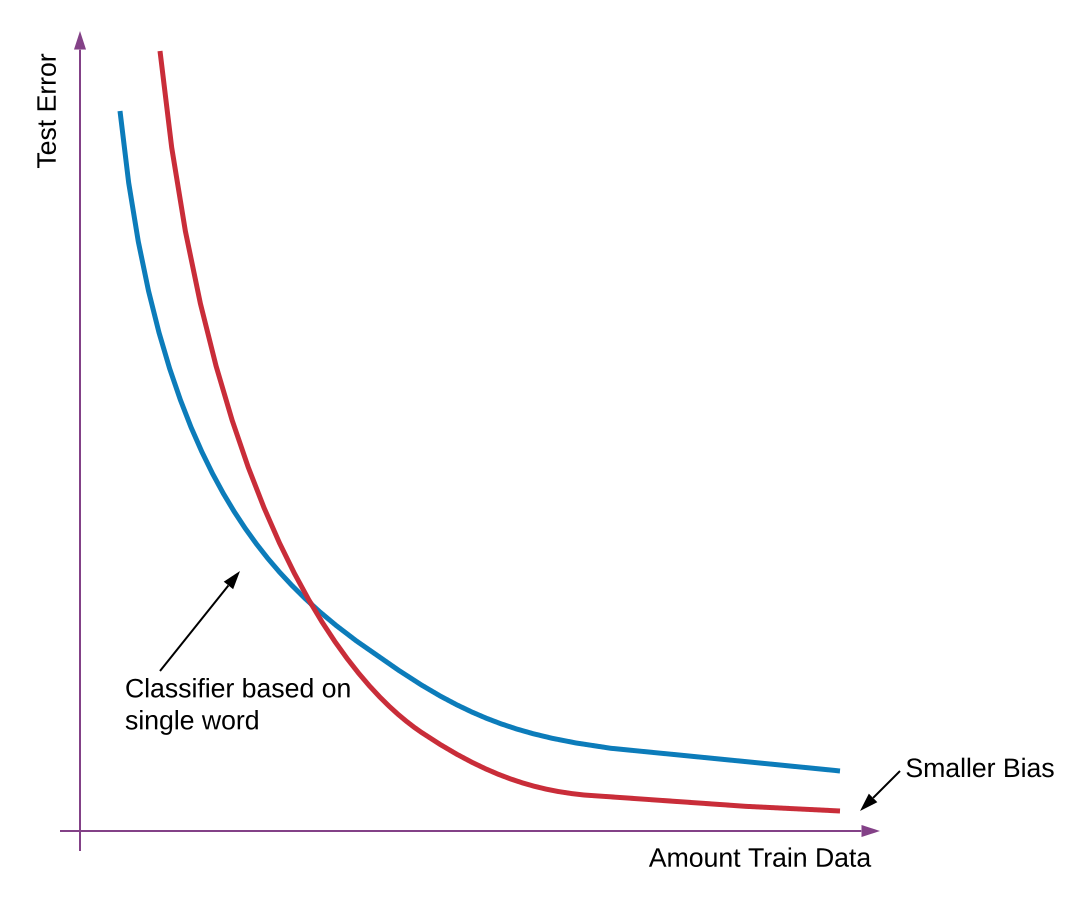
Talked about the fact of an amount of training data on the test error.
- Building a classifier using single word
- Question is, how does that relate to a classifier, based on pairs of words
Now for a classifier based on bigrams, when there is less data, it’s not going to do as well, because it has more parameters to fit.
- But when there is more data, it’s going to do better
- It’s going to be able to capture settings like, the sushi was not good
At some point, there’s a crossover where it starts doing better than the classifier with single word.
But notice the background model still has some bias here. Although the bias is small, it still has some bias.
Class Probabilities
Talked about classification in terms of just predicting
- Is this a positive sentence or a negative sentence
- Is email spam or not spam
But in general, want to go a little bit beyond that and ask about, what is the probability that his is email spam?
How Confident For The Prediction?
- Thus far, we’ve outputted a prediction of
- Positive (+)
- Negative (-)
- But, how sure are you about the prediction?
- “The sushi & everything else were awesome!” ←
- Definite positive (+)
- “The sushi was good, the service was OK.” ←
- Not sure, it’s not as definite
- “The sushi & everything else were awesome!” ←
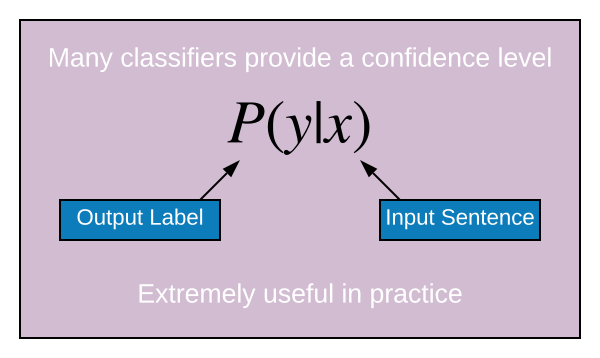
So what a classifier will often do, is not just output positive or negative, but output how confident, how sure it is. One way to do that is probabilities.
- So have to play the probability of being a positive or negative sentence, given the input sentence
- So the output label, what’s the probability output label, given the input sentence
- So instead of saying that’s definite positive (+), say the probability that it’s a positive (+) given in is
- The probability of being a positive (+), given , is only , because uncertain
Predicting probabilities or level of confidence is extremely important, and it allow to do many things. For example, when the probability is known, it can make decisions like
- What is a good decision boundary that trades off false positive and false negative
- Balance between the two
Summary Classification
Seen classification in a wide variety of setting and how can it really use to predict a class like positive or negative sentiment from data.
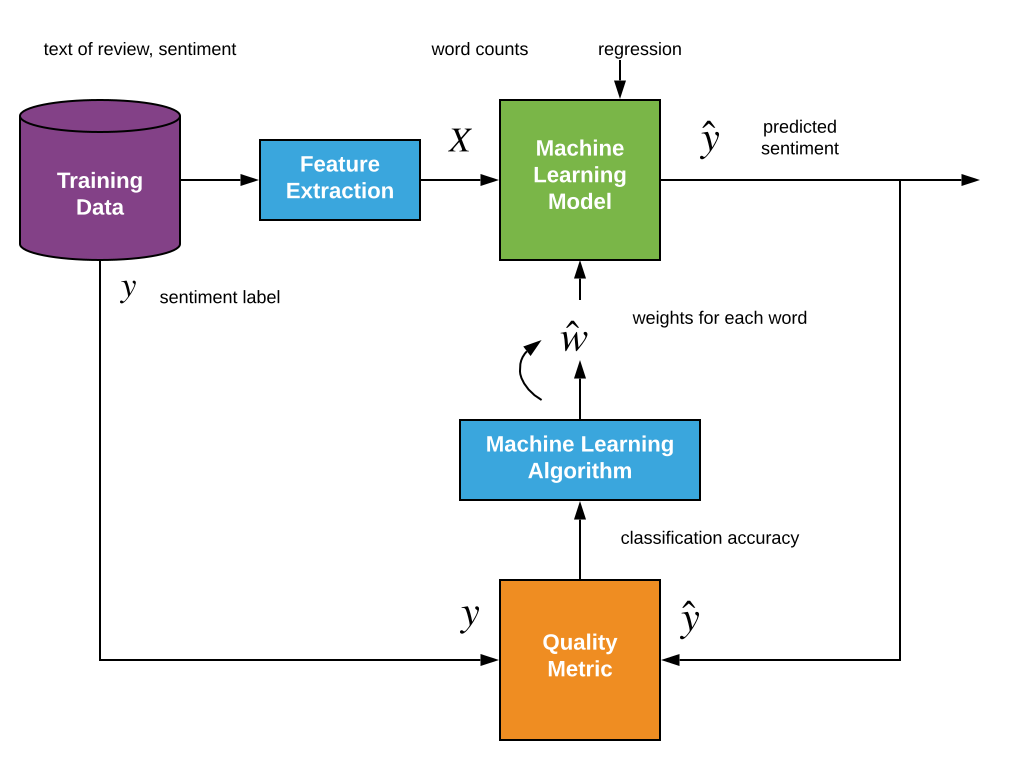
In regression, talked about this block diagram that really describe how a machine learning algorithm iterates through its data. Take this same block diagram and work through it and describe how it works out in the case of classification with sentiment analysis.
Classification for sentiment
- The data is the text of the reviews, so for each review, the text of review is associated with a particular labeled sentiment
- From that text of the review, feed it through a feature extraction phase which give , the input to the algorithm
- This here is going to be the word counts
- So word counts for every data point, for every review
- Now the machine learning model is going to take that input data, so the word counts, as well as some several parameters
- Which calling here ()
- Which are the weights for each word
- Combining these two (word counts and weights for each word), going to output the prediction
- If the score is greater than zero, it’s going to be positive
- If the score is less than zero, it’s going to be negative
- So this output here is the predicted sentiment
- If just using the model, it would be done here
- But really, in machine learning algorithm phase, it is going to evaluate that result, and then feed it back into the algorithm to improve the parameters
- So going to take the predicted sentiment, (), and compare it with the true label for the sentiment (sentiment label for each data point)
- That’s going to fit in and the quality measure is going to be classification accuracy
- The machine learning algorithm is going to take that accuracy and try to improve it
- The way the improvement works, is by updating the parameter
- That’s what the cycle for machine learning algorithm classification would look like
What You Can Do Now…
Looked at how to do classification
- Looked at various examples of where it can be applied
- Talked about a few models for building classification, especially in the context of sentiment analysis
- Built a notebook of a classifier from data and analyzed it
-
With this knowledge, ready to build an intelligent application that uses a classifier at its core
- Identify a classification problem and some common applications
- Describe decision boundaries and linear classifiers
- Train a classifier
- Measure its error
- Some rules of thumb of good accuracy
- Interpret the types of error associated with classification
- Describe the tradeoffs between model bias and data set size
- Use class probability to express degree of confidence in prediction
Appendix
Reference
- Classification: Analyzing Sentiment
- Predicting Sentiment By Topic
- Classifier Applications
- Linear Classifier
- Decision Boundaries
- Training + Evaluating Classifier
- What’s Good Accuracy?
- False Positive, False Negative, Confusion Matrices
- Learning Curves: How Much Data Needed?
- Class Probabilities
- Summary Classification
- Appendix
- Reference